Skip to content

February 2012 Holidays and Activities

January 25, 2012

valentine, Valentine's Day, heart, craftsFebruary:

February—Black History Month (began in 1926) Historical Printable Activity Gr1-2

February 2—Groundhog Day—Groundhog Day Crafts

February 6 (in New Zealand)–Waitangi Day–http://en.wikipedia.org/wiki/Waitangi_Day

Waitangi Day crafts and activities–http://www.activityvillage.co.uk/waitangi_day.htm

February 14—Valentine’s Day– The Heart: An Online Exploration (6th grade and up); Internet Scavenger Hunt–Heart (Gr 2-6)

Printable Coloring Pages and Puzzles (on their first page, scroll down to see all the options); The Greatest Gift (John 3:16);

February 15 (in Canada) National Flag of Canada Day — http://www.calendar-updates.com/info/holidays/canada.aspx

February 19—President’s Day— Abe Lincoln Project

Also check out this interesting blog post on forefather festivities…

http://wordnymph.com/2011/02/21/forefather-festivities/

February 20–in Canada–Heritage Day--http://www.calendar-updates.com/info/holidays/canada.aspx

February 23 — in Russia–Defender of the Fatherland day–http://en.wikipedia.org/wiki/Defender_of_the_Fatherland_Day

February 28 — in China–Peace Memorial Day – http://en.wikipedia.org/wiki/Public_holidays_in_the_Republic_of_China

Snapshots of a VSL #1

January 14, 2012

Snapshots of a VSL #1

By: Delana S

Rather than wait until I complete Dr. Linda Silverman’s book Upside-Down Brilliance: The Visual-Spatial Learner in order to write a review, I want to offer snapshots of my journey along the way.

This fifteen chapter, 400-page- book first released in 2002 is something I heard about a year ago and have been awaiting its re-release. There are many websites with information about visual-spatial learners, but this book and its author provide a detailed history based on research gleaned over a 20-year period of time.

In the introduction, Dr. Silverman provides an 18-question quiz to see if you or your student or child is a visual-spatial learner (VSL). This quiz can be found online: http://www.brightkidsworld.com/Are_You_A_Visual_Spatial_Learner_by_Linda_Silverman_s/745.htm

From her own introduction, she has written this book for “parents and teachers, for visual-spatial learners of all ages, for people who live with artists, musicians, inventors, and computer junkies…”

Up until recently, giftedness or high intelligence was defined or measured based on success in reading, writing, and arithmetic in a very left-hemispheric view. Dr. Silverman’s book is about right-hemispheric brilliance and giftedness of those who think outside the box.

The fifteen chapters cover topics, such as: visual-spatials vs. auditory-sequentials, being a non-sequential learner, engaging the right hemisphere, underachievement, ear infections, auditory processing, dyslexia, ADHD, memorization, organization, early and late bloomers, early signs of VSLs, assessing abilities, introversion, home remedies for ADHD, parenting VSLs, teaching techniques to reach visual-spatial learners, handwriting, and much more.

In the first chapter, Dr. Silverman expresses that the spatial child with “sequential deficits . . . lives in the moment and . . . may lack the ability to see the consequences” of a particular behavior. However, rather than focusing on the weaknesses (cannot plan ahead, cannot delay gratification, disorganized), Silverman stresses the importance of focusing on the strengths (losing self in the joy of the moment, use of imagination in play, contagious sense of humor, keenly observant, memory for detail).

Check out Dr. Silverman’s quiz for visual-spatial learners. If you are a VSL, a teacher of a VSL, or a parent of a VSL, then I highly recommendJenga ordering her book Upside-Down Brilliance: The Visual-Spatial Learner.

Check back here later for more snapshots.

Read more about Visual-Spatial Learners: http://www.education.com/topic/visual-spatial-learners/


Other articles on The Education Cafe that may interest you:

January 2012 Holidays and Activities

January 14, 2012

Adding Children’s Day to the January Calendar …

Happy New Year!

Want to see a holiday posted here for your country for January? Leave a comment and let us know.

New Year’s Day (US Federal Holiday) send e-cards

Virtual Fireworks

YouTube Disney World firework display

YouTube firework display in Dubai, UAE

On December 31st, if you don’t already, start a new tradition of praying in the New Year with friends and family. Consider observing Communion with your family and a few close friends as you visit and pray together to ring in the New Year.

Printable January Calendar and Activities

January is Clean Up Your Computer Month—Try Vinegar.  For internal clean up—Free up hard-drive space

January 3rd– Author J.R.R. Tolkien’s Birthday, 1892

January 6thEpiphany/Three Kings’ Day

2nd Saturday in January– Children’s Day in Thailand http://www.swp.in.th/childday.html

January 15—1929 MLK Birthday– observed 3rd Monday Martin Luther King, Jr. Day

January 17th –Ben Franklin’s Birthday Interesting site for all grade levels

January 18th–Winnie The Pooh Day (In observance of the birthday of Alan Alexander Milne, 1882.) pooh corner

January 27th—National Geographic Society founded 1888–lesson plans and activities

January 29th–National Puzzle Day Online jigsaw puzzles for preschoolers


Instilling Anticipation

January 12, 2012

As parents and educators we want our kids to be well-rounded not only academically but emotionally and spiritually, as well. Today, I read about another area that we may have to work at to incorporate in our children’s lives, and that is the area of anticipation and waiting. Most of us are not very good at waiting, and in today’s day and age we usually don’t have to wait very long.

Leigh does a great job of describing the problem and some of the consequences of growing up in the “Me Generation.” With microwaves and instant dinners, fast food, cell phones, e-mail, internet, everything comes without much wait. Check out her article and consider ways you can give your kids the gift of anticipation.

http://incaseimgone.com/2012/01/09/death-of-anticipation/

Now on Facebook

January 12, 2012

From parenting toddlers to sending kids off to college (and everything in between) The Education Cafe is here for you! Just now we reached 70,000 views!

If you have stumbled on this page and not found what you are looking for, please feel free to leave a comment/question/suggestion for us to work on.

You can now join us at The Education Cafe on Facebook and read updates there, as well as short notes about other interesting articles on blogs and websites.

Blessings!

Connected or Distracted?

January 10, 2012

As a Christian parent or educator do you find yourself struggling to stay connected to God? Do you have a child with disabilities and find days you need encouragement and hope? Struggling with unanswered prayer? My friend Kathryn W sent the following book review that might just be what you need to read in 2012.

A Praying Life: Connecting with God in a Distracting World

By Paul E. Miller

Foreword by David Powlison

Copyright 2009; NAVPRESS

Review by: Kathryn W

Let me begin by saying that this book was given to me by an 80 year old friend.  I only began reading it, because I knew she’d ask me what I thought, and I wanted to answer truthfully.  I saw the title and thought “Another book on how to pray.”  As often happens, I still have so much to learn…so much that I need to be reminded of.  The Father’s timing is always perfect.

The author, Paul Miller, shares from his own experiences in his life.  He tells several stories from his role as a parent.  He and his wife have six children, one of whom is an autistic daughter.  He has lived through tough times, like all of us, and is authentic.

The book is divided into three parts:

1. Learning to Pray Like a Child

Coming to Jesus like little children, just as we are…crying out in our need.

2. Learning to Trust Again

A considerable amount of the text is spent on cynicism; defining it and describing how it can so easily creep into our lives…defeated weariness leading to a critical spirit and cynicism.  Miller follows this up with how to  “Follow Jesus Out of Cynicism” through a childlike spirit that has learned to hope again…a grateful heart that has “Developed an Eye for Jesus”.

3. Learning to Ask Your Father

Part three begins with insight into the story the Father is weaving through the events in our lives, including what seem like unanswered prayers.  He encourages us to hope again.  Along with this, Miller gives some practical tips for organizing a prayer card file and beginning a prayer journal.  He also encourages using Scripture to pray for others.

Reflections:  This book has had an impact on me.  It has helped me focus on trusting the Father and discovering hope in difficult times.  It’s given me a renewed focus on prayer.  The section on cynicism was something that I took notes on…I see it a lot.  I’ve dealt with it myself.  Lots of wisdom shared here.  This book was worth the time invested in it.  The gift from my friend was truly a gift…

In Love With Bugs

December 29, 2011

–Delana S

Do you have a budding entomologist in your house? Do you have a student doing a unit on insects? You might want to visit the blog of the Dragonfly Woman. She has a whole series of articles on collecting insects, as well as other educational materials. Her blog roll includes links to numerous blogs about bugs.

And, if you missed my series on the importance of getting your kids out in nature, check out these articles:

Comments

2011 Popular Posts on The Education Cafe

December 20, 2011

Top Ten Posts for The Education Café for 2011 are:

  1. Five Basic Types of Curriculum 5,335

The five basic types of curriculum are Traditional, Thematic, Programmed, Classical, and Technological.  The most-used curriculum can be found within these broader categories…

2. Online Textbooks for Middle School and High School 3,891

Some texts are free and there are samples of other texts as well.

3. US National Reading Vocabulary Words Grades K-6  2,493

These links provide lists and weekly instruction tips for making sure your students mastered the reading vocabulary words necessary for each grade level.

4. First Pants 1,482

Parents of children who struggle with memory problems or organization or neurological disorders…

5. Free and low cost 8th Grade Books to read online or download 1,378

6. Links to Free Books to Assist in the Learning of Phonics: Especially for Older Children and Adults 1,242

7. Virtual Snowman Building and Snow Themed Unit Studies 1,196

8. Homeschooling Children with ADD/ADHD and/or ODD 961

A compilation of resources. 

9. Teaching Reading and Phonics to the Older Child or ESL Student 888

This parent recommends Reading Horizons to other families in similar situations (children learning to read and write English as their second language), as well as for children who need extra help in learning to read.

10. Math-related Virtual Field Trips 790

The Hotlist for Virtual Field Trips for math-related e-trips.

Thanks for hanging out in the café in 2011!

Be sure to check out these more recently posted articles as well:

9 Year Pregnancy

Bathing Elephants

Christmas Break Top 10

December 14, 2011

Top 10 Educational things to do with your kids during Christmas break:

  1. Start a family blog (get a free blog from http://wordpress.com – getting started is easy).
  2. Learn about another culture and holidays in that culture.
  3. Read a book together as a family.
  4. Write a review of the book for your blog. (Still haven’t started a blog? Post your review as a comment on The Education Café. If we really like it, we might do a special feature of it.)
  5. Visit a Christmas Tree farm (or a virtual one like — http://www.christmastrees.on.ca/education/virtual-tree-farm.html).
  6. Visit a museum or historical place nearby (not more than a 2 hour drive).
  7. Post pictures on your family blog. Have each of your children write a short description/caption for each picture.
  8. View other blogs to gain ideas about styles, themes, layouts. Here are some to get you started:

 http://delanasworld.wordpress.com; http://nineyearpregnancy.wordpress.com;

9. Go on a walk or drive through your neighborhood and then make a map of it. Stop at local establishments and take pictures. Have a bakery or food stand close by? Stop in for a treat.

10. Find fun things to do with leftover Christmas wrapping paper. You might use big sheets of wrapping paper to draw an outline of each child and cut it out. Here are some other ideas:

http://crafts.kaboose.com/recycle.html

http://www.wisegeek.com/what-are-some-uses-for-leftover-christmas-wrapping-paper.htm

http://www.marthastewart.com/274601/leftover-gift-wrap-ideas/@center/307035/santas-workshop


What fun things do YOU have in mind for your family over Christmas break? Any fun educational ideas?

More than Flash

November 29, 2011

Delana S

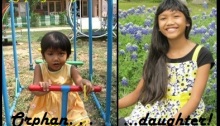
Recently, I had the opportunity to try out ChildUp Early Learning Game Cards. My daughter and I sat down with Teach Your Child to Count to 10 and Teach Your Child to Count to 20. Yes, she already knows how to count, but I needed a child’s mind to assist me in reviewing this product. Additionally, having been an orphan adopted as a 6 year old, our daughter missed out on a lot of early learning. She found these colorful cards of animals to be interesting, and I hope that they will assist us as we fill in gaps in her learning.

When I opened up each set, I fully expected them to be traditional flash cards. In reality they are so much more than flash cards. They were not even designed to be used as we would use flash cards. Each set includes the cards needed for teaching counting, but also instructional cards for teaching logic, zoology, quantity, addition, subtraction, categorization, size, and differences.

Each set of early learning cards also contains cards that educate parents on the development of children’s literacy skills. They provide research and examples showing the different benefits a child gains from working with each parent. Earlier this year I wrote an article based on the book Teaching with the Brain in Mind. That book provided some great insights into the importance of paying close attention to the input our children receive from sights, sounds, and food. Some of the instructional cards in the ChildUp Early Learning packs also teach parents needed information about brain development. For instance, one card mentions that “a baby’s brain is only 25 percent developed at birth, and after three years, it reaches 80 percent of its capacity.” That means that one of the most critical time periods in our children’s lives occurs in their first three years.

Though we are not blank slates at birth, much of who we become and what jobs we can do when we grow up depends upon the input we receive before we are five years old. The music, language, math logic we are exposed to as toddlers does impact our abilities later in life.  Another instructional card concludes with this strong statement: “At birth, all children are “gifted” for nothing in particular; they are gifted for everything.”

Make the most of your time with your children! Turn off the TV more often and engage your child in play, in music, in learning, in life.

*******************************

Highlighted links above include:

http://delanasworld.wordpress.com

http://www.childup.com/

http://theeducationcafe.wordpress.com/2011/02/06/grow-a-better-brain/

http://nineyearpregnancy.wordpress.com/

December 2011 Holidays and Activities

November 21, 2011
Note: This coming Sunday, right after Thanksgiving, is the first Sunday of Advent. See Advent ideas below.
Here are some good sites for celebrating Advent.

http://www.lifeway.com/Article/devotions-christmas-advent-2011-week-one-faith

http://www.cresourcei.org/cyadvent.html

http://www.kingofpeace.org/advent/advent.htm

http://www.thrivingfamily.com/Family/Life/Extended%20Family/2010/jan/spiritual-heritage.aspx

Fun lessons/activities for December

The Giving Tree

A Colonial Christmas in Williamsburg

Plays, Prayers, Songs, and Stories

Gingerbread songs, poems, games & more

Christmas Around The World

Bathing Elephants

November 13, 2011

--Delana S

Imagine the difficulty of getting an elephant out of the bath! Or, have you ever tried putting a cat in a bathtub full of water? Sometimes bathing a strong-willed child can be about as much fun! If you have a strong-willed or impulsive child you have probably experienced the bath time blues. You either cannot get them into the tub or you cannot get them out. And, either way you end up with as much water and soap on you. I am not just referring to toddlers. Sometimes elementary children can put up a big fuss as well. Here are a few tips you may want to try:

1) Refrain from waiting until just before bedtime to give your child a bath (or to send your older child to bathe). At that time of day they tend to be tired and more grouchy. Plus, if they are on medication for ADHD, their medication has likely worn off. So, getting them into the tub could be more of a hassle. If they have gotten into the tub, they might not want to get out because they know that the very next thing is going to bed time. Consider an afternoon or before dinner bath.

2) Reserve something they consider very special for just after bath time. Make it a ritual or tradition to play their favorite game right after bath time. If that is the only time they get to play that game with you, they will really look forward to it. Our daughter used to watch a pre-recorded show with us just before bedtime. When the show was over she always put up a fuss and drug her feet getting cleaned up and ready for bed. So, we switched it around. Now, she gets ready for bed and even has her bedtime story before the family-snuggle-on-the-couch episode.

3) Remember that children do better in a routine. Once the ritual/tradition has gotten ingrained, it will get easier for you and your child.

Do you have bath or bed time tip that you have found helpful? Please leave a comment.

Note to those who have adopted an older child: Find out what the bath time routine was for your child in their previous living situation (orphanage, foster home, etc.) if possible. If your child was used to only taking showers or only bathing once a week, it will take some time to get used to a different routine. Make gradual changes.************************************************************

Have a strong-willed child at home? You may also be interested in reading:

http://delanasworld.wordpress.com/2011/10/26/huggin-porcupines/

http://theeducationcafe.wordpress.com/?s=strong-will

Should you be concerned?

November 7, 2011


In the doctor’s office today I read “Wake-up Call”–an article in Parenting Early Years magazine (May 2011)—which discussed the risks of cancer to toddlers and teens caused by cell phone usage. They cited a study done in 2008 in Sweden which stated that children and teens were five times more likely to get brain cancer if using cell phones regularly. Other articles raise concern about cell phone usage by pregnant women and the link to behavioral issues and ADHD.

This information alarmed me, so I came home and did a little research. If you are concerned with how cell phone usage might be affecting your children, you may want to check out a few of these links. Even though research is still inconclusive, you may also want to take some of these precautions:

1)      Do not talk on the cell phone or text with the cell phone while nursing a baby or holding your toddler.

2)      Have your child use a speaker phone or head set. (Or, better yet, have them use a traditional phone.)

3)      Do not let your toddler play games/apps on your cell phone.

4)      Place limits on how often/how long your child or teen may be on the cell phone.

Here are some articles on the web where you can read more:

http://www.cancer.org/Cancer/news/News/more-research-on-cell-phone-safety-needed-experts-say (American Cancer Society)

http://www.cancer.gov/cancertopics/factsheet/Risk/cellphones (Very informative article by the National Cancer Institute with bullet points about why there is a concern, what you can do, and what research has been done and is being done.)

http://test.beperkdestraling.org/Studies%20en%20Rapporten/Prenatal%20Postnatal%20Exposure%20Cell%20Phone%20Behavioral%20Problems%20Kids%2002%202008.pdf (Prenatal and postnatal concerns including behavioral problems and ADHD).


In a CBS news article, Dr. Ronald B. Herberman, director of the University of Pittsburgh Cancer Institute, said, “Really at the heart of my concern is that we shouldn’t wait for a definitive study to come out, but err on the side of being safe rather than sorry later.”


Nine Year Pregnancy

October 29, 2011

For two years now many of you have visited The Education Cafe to find answers and ask questions regarding education–both home school and traditional school, as well as to find timely advice regarding parenting. As creator and administrator of this blog, I would like to personally invite you to check out my latest endeavor. I have been writing a book that is in the production phase with CrossBooks Christian Publishing Company, a a slow climbdivision of LifeWay. The book, Nine Year Pregnancy: Waiting on God–Our Journey of Adoption, would be helpful to anyone in the adoption process, as well as dealing with issues that arise in the early years (particular issues surrounding attachment, grief and bonding).

But, this book is not just for and about adoption! It is the journey of having a dream, experiencing death of that vision and seeing God fulfill it in His time. If you are waiting on God to answer a prayer or feel like God will never answer your prayer—for a child, for a mate, for some other need or desire or dream—then this book will show you how our family trusted God to walk with us through the dark, scary, unknown valleys as we waited on Him. If you are trying to get pregnant or have experienced a miscarriage, then this book may give you hope and encourage you to hang on.

The book will hopefully be available by spring 2012. Interested? Click on the link below and subscribe to the book’s blog to stay informed and to receive sneak previews.

Thanks!

Delana

http://nineyearpregnancy.wordpress.com/

Flock, Covey, or Gaggle

October 21, 2011

Need a fun project to do with your kids? Ask them to search the web (or books) to figure out which groups of birds are flocks, which are covey, and which are a gaggle. Are there other names we assign to groups of birds? Feel free to comment here and let other readers know.

“Birds of a feather flock together.”

Know other bird proverbs?

If you want to cheat and just see a whole list of collective nouns for birds, click on one of the following:

http://palomaraudubon.org/collective.html (just birds)

http://www.opundo.com/gaggle.php?searchstr=* (birds and other animals)

November 2011 Holidays and Activities

October 20, 2011

November:

November–In 2009, The Education Cafe had been in operation for just over one month. In Nov 2009, this blog received 550 views. Now, the average monthly viewership is 4000! In November 2010, the personal blog Delana’s World was started to provide insight and encouragement on a more personal level. It began with 14 views that month and now averages 300 views a month.

November 2 – Daniel Boone born, 1734

November 3 – Robert Louis Stevenson born, 1850 (Treasure Island unit study.)

November 6–Feast of Sacrifice observed by Muslims around the world. In Kazakhstan–Kurban Ait, in Arabic countries–Eid al Adha. For the names of this holiday in other countries, click here.

November 11 – Veteran’s Day in America; Remembrance Day in Australia–traditions and info

November 12–Constitution Day in Azerbaijan

National Children’s Book Week, third week–activities on Education World

November 16, 1952 – Lucy first holds a football for Charlie Brown in the Peanuts cartoon strip. www.snoopy.com

November 17—National Adoption Day (Events in Texas, click here); Or, choose your state for events. Delana’s family is celebrating 4 1/2 years with the daughter they adopted from Thailand. She is currently working on a book that tells their story. For  articles and poetry about their adoption journey, check this out.

Thanksgiving Day, last Thursday (activities & lessons);

Lincoln Proclamation

Some of these ideas come from: http://www.easyfunschool.com/

Thanksgiving Blessing Tree

I ran across this idea. Thought you might want to use it:

Make a tree out of construction paper and hang it on the wall. Every day put leaves on it with things you are thankful for. By Thanksgiving you should have it completely filled and running over. Just a way to help the kids and grownups to remember what God has done for them. You can make your leaves out of colored construction paper like fall leaves.  Or, trace your child’s hand on different colors of construction paper.  Hang each “leaf” upside down on the tree.  Curl the fingers slightly by rolling up over a pencil.  Write the thankful statement on the palm of the hand.

Note: I posted the above idea in 2009; in 2010 I found another wordpress blog with a similar idea. Check it out:

http://greymatterlife.com/2010/10/27/the-30-day-gratitude-challenge/.

No Power for the Hour?

October 10, 2011

I know that many of you who read this blog live overseas. Some of you face multiple problems a week with lack of electricity (okay, for some probably daily). Many of you have learned ways to cope. I well remember days in Central Asia when I would get up and begin to homeschool, just to have to face power failure and re-plan my day.

I rarely post things on here that are not educational, as I post that stuff on my personal blog; however, I read something today that will make you laugh. Hopefully, today you have power so you can read this. Then, maybe tomorrow (or later today) when you don’t have power you can recall this story and at least enjoy a laugh…

http://helpfortheheart.wordpress.com/2011/10/07/i-will-survive-well-maybe/


Still need help? Check out an earlier post on surviving homeschool burnout, featuring a homeschool version of the song “I will Survive.”

Back to Nature, part 4: P.E., Music, Art and the nPod

October 10, 2011

Delana S

Are your children receiving the most benefits from a well-balanced education including P.E., Music, and Art? Do you know how these affect academic learning? Is organized sports and normal gym classes the most beneficial way to receive physical education? This is my final discussion on Richard Louv ’s book, Last Child in the Woods: Saving Our Children from Nature-Deficit Disorder (LC).

I have had many parents, particularly those who homeschool (but also those in national schools), write me about the challenges of finding ways to involve their children in physical education and the arts. On the other hand, I know parents, teachers, and schools who believe that these are not critical components of a good education. In my other articles on getting back to nature, I pointed out how Louv made a great case for getting kids outside and into nature more. He also reports on research showing that kids who studied the arts for at least four years scored higher on the math and verbal sections of the SAT. At the same time, many school districts are dropping environment-based and arts programs in a return to the basics. Louv stresses that proponents of returning to teaching the arts have shown how the arts and music “stimulate learning in math and science.” Furthermore, he says that “an argument can now be made that nature education stimulates cognitive learning and creativity, and reduces attention deficit” (p. 138 LC).

For homeschooling families looking to include more physical education into your program, I want to emphasize that to receive the benefits Louv shares in his book, the P.E. would need to come in the form of more time in natural play–particularly in green spaces. While gymnastics and sports clubs have their places in terms of helping children and adult stay in shape, they are not as beneficial to mental restoration as physical exercise out in nature. Bicycling, running, playing at the park, and taking your kids hiking are great ways to help them get physical fitness and reap the benefits of being out in nature. On pages 169-174 of Last Child in the Woods, Louv offers some great tips for nurturing constructive boredom and “structuring unstructured time.”

In 2003, Finland scored higher than 31 other countries, including the United States, in literacy, math, and science. Louv says that “Finnish educators believe in the power of–get this–play,” and Finland allows teachers great “leeway in how they teach.” Students are allowed 15 minutes of outside playtime after every 45 minute lesson (pp. 205-206 LC). Louv also believes that “environment-based education can surely be one of the antidotes to nature-deficit disorder.” This type of system would use nature and places out in the community as the “preferred classroom.”

Many homeschool families are actually quite good at offering their kids outside playtime, however, just like the need for classroom teachers to be intentional, even homeschool families fall into routines that keep them indoors. Some families do well in the U.S. but then move to countries overseas where finding a green place or a child-friendly place outside is challenging. Most often, though difficult, it is not impossible to find a place but may take more time and intentionality.

In Last Child in the Woods, Louv presents research showing how schools using model environment-based programs, produce students who score better on standardized tests, have higher GPA’s, and “develop skills in problem-solving, critical thinking, and decision-making” as well as students who “typically out-perform their peers in traditional classrooms” in terms of reading skills (p. 206-207 LC).

Towards the end of his book, Louv quotes part of one of my favorite Bible verses, the 23rd Psalm:

1 The LORD is my shepherd, I shall not be in want..  2 He makes me lie down in green pastures, he leads me beside quiet waters,  3 he restores my soul. (NIV 1984)

And, finally, in his addendum on pages 360-385, he offers 100 actions to stimulate you and your child’s creativity in nature. The first one involves buying a truckload of dirt (in some places as cheap as a video game) and a bucket and shovel for your kids to spend time playing in. The list offers some fun and amazing things to do in nature. You have heard about the iPod . . . let Louv introduce you to the nPod.

*******************************************************************************

For a devotional on the 23rd Psalm, click here.

To find out how marriage is like P.E. and art, click here.

For previous Back to Nature articles, see the following:

Back to Nature, part 2: Combating Nature-Deficit Disorder

Back to Nature, part 1 (Intro to “Last Child in the Woods”).

The Nature Zone. (A Review of Louv’s book: “The Nature Principle”).

Or, on Delana’s World, read:

Less Traveled Road (An adventure story in Central Asia).

Hit The Bunny Trail  (A story about running in nature.)

Having Nature-Deficit Disorder

October 6, 2011

If you have been reading the recent posts on Back to Nature and think “Wow! This sounds like me or my child,” then you may be interested in the humorous confessions of someone with Nature-Deficit Disorder.

Nature…Really? by RS Jacobs

Back to Nature, part 3: Nature Therapy and ADHD

October 5, 2011


–Delana S

Over the past six years, during numerous consultations with families who live and work outside of their homelands, I have had many parents ask me questions about Attention Deficit Disorder, as well as other neurological disorders, such as Autism Spectrum Disorders. Most parents want to know why we are seeing a greater prevalence of these disorders then 30, 40, or 50 years ago. Some wonder if the diagnoses were just not being made or if kids are being over-diagnosed (or misdiagnosed) today. While there may be some truth to those claims, it behooves us to look at what has changed. We can definitely see that technology has changed. As parents, we know that kids today spend less time outside playing and much more time sitting indoors in front of televisions, computers, or game machines.

One day, a fellow education consultant told me about Richard Louv ’s book, Last Child in the Woods: Saving Our Children from Nature-Deficit Disorder (LC). This piqued my curiosity, so I picked up a copy and began to wonder even more about the effects of technology on our children’s generation. Louv cites studies done in 2004 that link television watching to ADHD…and says, “Children’s hospital and Regional Medical Center in Seattle maintains that each hour of TV watched per day by preschoolers increases by 10 percent the likelihood that they will develop concentration problems and other symptoms of attention-deficit disorders by age seven” (p. 102 LC). Until reading his book, I had no idea that at the time his book was written (2005), “nearly 8 million children in the U.S.” were suffering from various neurological disorders such as ADHD (p. 100 LC). He even reveals studies in his book that show the benefits of nature therapy for assisting in the treatment of ADHD, and in some cases replacing the need for medicinal or behavioral therapies (p. 100 LC).

The questions many parents were asking me regarding the prevalence of these disorders today versus 50-60 years ago could be linked to not only technological changes, but changes in exposure to nature. Louv states that sixty years ago many kids grew up in families with an agricultural connection and that boys and girls spent their time and energy “in constructive ways: doing farm chores…splashing in the swimming hole, climbing trees, racing to the sandlot for a game of baseball” (P. 102 LC). He discusses the results many parents find when their kids spend more time outside, like: less stress and reduced hyperactivity.

If you are a parent or teacher concerned about your children with ADHD or another neurological disorder, I would recommend that you read Last Child in the Woods. Even if you do not have the time to read the whole book, at least look at pages 360-385 where Louv offers over 100 actions to stimulate you and your child’s creativity in nature. Additionally, you may be interested in reading pages 103-105 to learn about something called “directed-attention fatigue” and how it leads to “impulsive behavior, agitation, irritation, and inability to concentrate.” Follow the research on how nature can restore and relieve those with directed-attention fatigue, and how green spaces can help children with ADHD think more clearly and deal better with stress. Based on his research, Louv reports that “greenery in a child’s everyday environment, even views of green through a window, specifically reduces attention-deficit symptoms” and he offers several tips for helping your child at home and in the classroom (pp. 106-107 LC).

Did you miss the earlier articles on this topic?

Back to Nature, part 2: Combating Nature-Deficit Disorder

Back to Nature, part 1 (Intro to “Last Child in the Woods”).

The Nature Zone. (A Review of Louv’s book: “The Nature Principle”).

Or, on Delana’s World, read:

Less Traveled Road (An adventure story in Central Asia).

Hit The Bunny Trail  (A story about running in nature.)


You may also be interested in this link from WebMD: http://www.webmd.com/add-adhd/news/20040827/nature-helps-fight-adhd

Acronyms and Acrostics

October 3, 2011

–Delana S

Acronyms and acrostics are great tools to help kids remember information and study for tests. Most children that take piano lessons learn that FACE stands for notes on the scale (as does, Every, Good, Boy, Does, Fine). Many students learn the order of the planets, by coming up with a phrase to represent the first letter of each of the planets.

Some acronyms, over time, have become the word for which they describe. Our word, radar, once was an acronym for RAdio Detecting And Ranging.

One way to help students (or ourselves) remember definitions (or deeper meanings) of words they are learning is to try to use the word itself  as an acronym for the definition that defines it. Town might be Tiny city, Own government, Widely populated, Named urban area.

For an example of this using the word faith, check out this post on my personal blog: http://delanasworld.wordpress.com/2011/10/03/all-about-faith/


Another great way to learn vocabulary is through LINCing pictures. Check this out to learn about this strategy:

Vocabulary LINCing Pictures


Back to Nature, part 2: Combating Nature-Deficit Disorder

September 30, 2011

By: Delana S

Some have said, “Silence is my music” (RS Jacobs). I would like to say that nature is my music. The other day, I sat at the park reading and taking notes from the book Last Child in the Woods by Richard Louv (LC), while my daughter played with friends on the playground and collected leaves and pinecones. The breeze made a soft sound as it blew wisps of my hair across my face and lifted the edges of my notebook paper. A crow sat on a nearby tree, welcoming me to my outside office. Squirrels chattered and scurried about gathering acorns. A red-crested woodpecker came a-knockin’ on the the office “door.” Being out in nature has a way of decreasing stress. Why else would people produce and sell nature sounds cds?

In my post, Back to Nature—part 1, I shared Richard Louv’s statement about a new phenomena he titled “nature-deficit disorder.” He does not use this term to suggest or represent any kind of official medical diagnosis. Rather, he says, “Nature-deficit disorder describes the human costs of alienation from nature, among them: diminished use of the senses, attention difficulties, and higher rates of physical and emotional illnesses.” Additionally he says that we have to consider carefully the consequences of the disorder so that we “become more aware of how blessed our children can be—biologically, cognitively, and spiritually—through positive physical connection to nature” (p. 36 LC).

For many years, research has shown the benefits of pet and plant therapy for the elderly, children, and the infirm. Louv also points out research that has shown that a person’s blood pressure can be lowered just by “watching fish in an aquarium” (p. 45 LC). I suppose that is why so many dentist and doctor offices have aquariums in them nowadays.

Once, while living in a third world Central Asian country, I visited friends in a Mediterranean country. My friend’s home had a huge window in the dining room that looked out into a lovely garden with trees and flowers. The view relaxed and renewed me. It also inspired me to buy artificial plants and flowers to take back to my apartment. I also purchased some live plants upon returning. A decade later after living in the desert for over five years, I visited friends in Germany. One wall in their living room was almost all a window to their backyard: a lush, green yard that backed up to a creek and a forest. Again, I realized the medicinal effects of nature. Louv shares that “Cornell University environmental psychologists report in 2003 that a room with a view of nature can help protect children against stress, and that nature in or around the home appears to be a significant factor in protecting the psychological well-being of children in rural areas.” He goes on to emphasize that children in third to fifth grades in rural areas experienced greater results if they had more nature near their homes and less conduct disorders, anxiety, and depression (p. 50 LC). Knowing how nature affected my own psychological well-being shows me that adults and kids alike need nature in their lives.

Study after study shows benefits to all kinds of people. Gardening has proven beneficial to Alzheimer patients and to reduce the risks of dementia in women over 60. Kids today tend to spend more time indoors than outdoors. When I was growing up, we still made mud pies in the summer and igloos in the winter. In Richard Louv’s other book The Nature Principle he pointed out that people in our generation can remember a time when they would “lie in the grass and watch the clouds move” (p. 81 NP). Do your kids ever lie or sit outside and watch clouds and find the rabbits and dragons and other interesting cloud shapes? What are we doing as parents to make sure our kids are inheriting the gifts of exercise and nature? One way that I personally know that we fell short in parenting our sons was by not leading by example regarding time spent outside in nature and time invested in exercise. We took our ten year old daughter on a two mile nature run last weekend. We run three times a week and want to include her at least in one of those times each week. Also in that book, Louv quoted Janet Ady of the U. S. Fish and Wildlife Service, as she spoke about the benefits of nature and gave this prescription: “Use daily, outdoors in nature. Go on a nature walk, watch birds, and observe trees. Practice respectful behavior in solitude or take with friends and family. Refill: Unlimited. Expires: Never.”

In Back to Nature part 3, we will look at the effects of nature on those with ADHD, as well as something called environment-based education. Stay tuned…

Did you miss the earlier articles on this topic?

Back to Nature, part 1

The Nature Zone.

Or, on Delana’s World, read:

Less Traveled Road

Hit The Bunny Trail

Back to Nature, part 1: A Review of “Last Child in the Woods”

September 26, 2011

By: Delana S

“…at the very moment that the bond is breaking between the young and the natural world, a growing body of research links our mental, physical, and spiritual health directly to our association with nature—in positive ways.” (p. 3 LC)

A co-worker of mine recommended that I read the book Last Child in the Woods: Saving Our Children from Nature-Deficit Disorder by Richard Louv. The title certainly intrigued me as I wondered about my own family and whether or not we suffered the effects of not being in nature enough. Through the years research has certainly been done to show the benefits of nature on hospital patients, office workers, and stressed-out travelers in busy international airports. Mr. Louv provides additional research and information regarding the effects on classroom students, particularly those diagnosed with disorders, such as ADHD. If you are concerned about your own family and are curious about ways to either get out into nature more or bring it into your home, workplace, and community, read the summary below and consider getting your own copy ofLast Child in the Woods (LC). His newest addition includes a field guide with at least 100 ways to improve your home, school, workplace, or community to make it more nature friendly.

As parents and teachers, we emphasize the importance of eating healthy, eating a good breakfast, and getting plenty of sleep at night. Louv stresses that for kids with ADD or other maladies, exposing them to nature can be just as therapeutic as “good nutrition and adequate sleep” (p. 3). As a parent of a child with ADD, I know the benefits of medicines such as Concerta and Strattera; however, I am always looking for ways to make sure I am doing everything possible non-medically as well. Louv points out that the woods were his “Ritalin” and that nature had a calming effect, enabling him to focus better (p. 10 LC). He shows research done by the Robert Wood Johnson Foundation linking mental health problems to a sedentary childhood. He states that “unstructured outdoor recreation…doesn’t cost anything,” which is true monetarily speaking; however, it costs parents an investment of time and intentionality (p. 33 LC). Some parents already spend time taking kids to all kinds of organized sports and activities, so for them it would be a shift of hanging out at the park instead. For parents who tend to hang out indoors with their kids, let this challenge you to improve not only your kids’ physical and mental health, but yours as well.

Louv makes an excellent point, though, that because playing in nature has no monetary cost, no one is willing to fund the research to point out the benefits. He quotes James Sallis, program director of the Active Living Research Program as saying, “If kids are out there riding their bikes or walking, they’re not burning fossil fuel, they’re nobody’s captive audience, they’re not making money for anybody…follow the money” (p. 33 LC). I believe that if kids are prisoners to advertising agencies and game machine companies then not only are those businesses making money, but doctors, psychologists, and pharmaceutical companies are, too.

Take a look at your family and consider the amount of time you spend in nature, by keeping a log of time spent actually touching, smelling, hearing, seeing, and even tasting nature. Many small children today, according to Louv, “spend more and more time in car seats, high chairs, and even baby seats for watching TV. When they do go outside, they are often placed in containers—strollers—and pushed by walking or jogging parents. Most kid-containerizing is done for safety concerns, but the long-term health of these children is compromised.”

As we look more into Mr. Louv’s book Last Child in the Woods, we will learn more about the ways nature improves physical and emotional health, reduces symptoms of ADHD, improves cognitive abilities, and increases “resistance to negative stresses and depression” (p. 35 LC). Because of these issues, and to further discussion on the matter, Louv has called this phenomena: nature-deficit disorder.

Stay tuned for part 2…

Or, while you are waiting for part 2, check out The Nature Zone.

Or, on Delana’s World, read:

Less Traveled Road

Hit The Bunny Trail

October 2011 Holidays and Activities

September 26, 2011

This past week in September we celebrated Educator’s Day in America. In October, Teacher’s Day is celebrated around the world.

October 1–National Day in China; Decorations, crafts, and photos

1st Monday–Australian Labor Day

October 5thWorld and International Teacher’s Day. Check out teacher day info on these countries: India, Thailand, Canada, Russia, Australia, Philippines.

2nd Monday—Columbus Day http://familycrafts.about.com/cs/octoberholidays/l/bloct11th.htm

Columbus Virtual Field Trip  Christopher Columbus and Other Famous People

Also 2nd Monday in October–Canadian Thanksgiving; check out these craft and clip art ideas.

October 19thStar Spangled Banner First Sung In 1814.

October 28th—Statue of Liberty’s birthday http://familycrafts.about.com/cs/octoberholidays/l/bloct28th.htm

October 29th–Republic Day in Turkey; Kids’ activities for Turkey

The Nature Zone–A Review of “The Nature Principle”

September 22, 2011

By: Delana S

Do you desire for yourself or your children:

  • A sharper mind?
  • A stronger immune system?
  • Less stress?
  • More energy and strength?
  • Better instincts?
  • Enriched creativity, imagination, inspiration?
  • Increased patience?
  • Heightened senses?
  • Greater sense of satisfaction with life?
  • An edge in a competitive job market?
  • A healthy and fit body?
  • Relief from physical or emotional pain?
  • A deeper connection with the Creator?

Vitamin N

If I told you I knew of a vitamin you could take that had mountains of research backing its claims to do all that and more, you and countless others would stand in line for it. Richard Louv, in his book The Nature Principle: Human Restoration and the End of Nature-Deficit Disorder (NP), calls it Vitamin N for nature. Mr. Louv also authored the bookLast Child in the Woods: Saving Our Children From Nature-Deficit Disorder (LC). You probably do not have time to read two 300+ page books. Have time for the highlights? Read on! One book will be reviewed in this post and the other one in a following post.

In The Nature Principle, Louv discusses the growing disconnection we have with nature and how this dulls our senses. One day his son Matthew asked him if faith was a sense. . .”as in sensing a higher power,” to which Louv commented, “Perhaps this sense, if it is one, is why so many of us use religious terminology as we talk about our experiences of nature, even if we’re not religious in a formal way” (p. 18 NP). In today’s day and age, adults and children alike have become immersed in the electronic realm. Immersion in this, “without a force to balance it—(drains) our ability to pay attention, to think clearly, to be productive and creative. The more high-tech we become the more nature we need” (p. 24 NP). Louv emphasizes how we are born with senses that connect us to every living thing in the world, and that being in a natural environment often stimulates “our ability to pay attention, think clearly, and be more creative, even in dense urban neighborhoods” (p. 27 NP).

From research done by environmental psychologists Rachel and Stephen Kaplan, Louv points out many ways that the natural world benefits people. The Kaplans’ research specifically dealt with nature’s effects on helping people deal with fatigue, irritability, impulsivity, distractibility, making poor choices, impatience, and poor decision making. They discovered nature’s ability to restore the brain (p. 29 NP).

Improved Minds

In other studies that Louv sites, researchers discovered that having a view of nature improved standardized test scores, reduced criminal behavior, improved cooperation, boosted self-esteem, and aided conflict resolution and problem solving (p. 30 NP). He also shared insights from great minds in the science and literary world that “revealed greater mental acuity after a nature walk” (p. 33 NP). Again, how many people would willingly line up in the store for a vitamin that research had proven reliable for making you smarter? And, the answer is as simple as taking a walk on the bunny trail.

“It’s reasonable to speculate, then,” Louv writes, “that time spent in the natural world, by both restoring and stimulating the brain, may lead to bursts of new neurons (the brain cells that process and transmit information)” (p. 34 NP). As we age and worry about losing brain cells, this is great news! Louv also quotes writers and painters who are “drawn to the outdoors for refreshment and ideas,” as well as to de-stress and be happy (p. 35 NP).

This is definitely a new era we are entering. We cannot make technology go away. And, there is a valid place for learning about and keeping up with technology. However, we also need to realize that the high-tech mind is programmed or wired differently than the nature-focused mind.  Those who will be highly sought after in tomorrow’s job market may just be those who have developed both the techy-mind and the mind of the natural world. Louv gives many great examples of the senses and abilities developed by those who spend time in the natural world saying that our world will need those who have a good “balance of high-tech and natural knowledge” (pp. 38-39 NP).

One fascinating story in The Nature Principle was about a high school student who took pride in his abilities and accomplishments in the computer world. This young man spent two weeks on an organic farm for summer camp, without the Internet. When he returned home and began going through all the e-mail and Facebook notifications he said, “I just didn’t care. What I really wanted to do was go outside and have fun in the real world” (p. 39 NP). Sometimes it just takes an extended break away from the gadgets that control us to remind us of our need for nature, and the many ways we benefit from it.

Better Health

Today, many places of business have discovered the benefits of nature. Hospitals use natural and artificial nature to promote faster healing. Offices provide cubicles with a view or internal gardens where workers can find a reprieve from stress throughout the day. Not long ago, my husband and I traveled through the Amsterdam airport. We had a long layover and discovered a huge area that had recently been re-done. On the glass wall a panorama of a real-life park scene had been glued in place. This scene allowed light to enter but blocked the chaos of travelers coming and going on the other side of the wall. Artificial and real trees were put in place as well as a nature-friendly balcony with picnic table. Inside, under the trees, weary travelers could lounge on camo-colored beanbags. Computerized butterfly images danced under the tree for children to chase. Nature-sounds played softly in the background. In chapter four, Louv points out that researches have found that real nature and even murals of nature with recordings of nature sounds help control pain and reduce hospital stays (pp. 46-47 NP). Although I have not experienced that, I can attest to the way in which I was able to relax and de-stress in the midst of a busy, chaotic international airport.

Deficiencies

Vitamin N (rather, a walk through nature) actually benefits another necessary vitamin. “According to one study, as many as ¾ of U.S. teens and adults are deficient in Vitamin D, which is obtained naturally from sunshine and some foods…Vitamin D blood levels are dropping and that deficiency is associated with…cancer, arterial stiffness, type 2 diabetes, lower mood levels during winter, decreased physical strength in young people” as well as other mental and physical health issues (p. 48 NP).

Though we understand the risks of lack of nature and the benefits of being in nature, why do we as a culture continue to increase opportunities for television viewing and decrease opportunities for watching the physical world? Louv points out how many families are buying vehicles with built in TV or game machines instead of encouraging what parents used to encourage, things such as watching cows, clouds, birds on electrical wires, road kill, etc., and dreaming of the future (p. 63 NP). Instead of using backseat babysitters encourage your kids to look at and really see the amazing things around them.

Through much of my own reading, I have seen many counselors report that teenagers need at least 10-12 hugs a day from their parents for mental health and to stay sexually pure. Yet, in The Nature Principle, Louv discusses how physical touch has decreased as time in nature has decreased. He says that many people even go throughout an average day without even a handshake (p. 67 NP).

Nature Smart

In my post “How Does Your Child Think” from June 2010, I wrote a review of books and conferences written and taught by Kathy Koch, in which she discusses Gardner’s Multiple Intelligences. Louv also references Gardner’s theory by saying that there were originally seven intelligences, to which Gardner added an eighth, a naturalist intelligence or “the human ability to recognize plants, animals, and other parts of the natural environment, like clouds or rocks” (p. 72 NP).One excellent point Louv makes particularly about the naturalist intelligence, but not to the exclusion of the other seven, is that “children are able to attune themselves to all kinds of learning if they have appropriate developmental experiences” (p. 74 NP). Think back to your own childhood. I well remember spending much of my elementary-aged years playing games outside, such as: hide and seek, freeze tag, and swinging statues. I also remember climbing trees, building tree-houses, playing in the park, and going on long adventures hunting four-leaf clovers. Are kids today being allowed and encouraged to spend time outside?

According to Louv, studies in four countries show that when given a choice between green play areas and asphalt/manufactured play areas, the children choosing the green areas engage in more creative forms of play and show a “greater sense of wonder” (p. 88 NP). Which came first? Do creative children choose green areas for play or do children who have been exposed to play-in-nature turn out more creative? It seems that research is beginning to point to the latter.

The Road Taken

One day during our years living in one of the most ecologically devastated cities of Central Asia, our landlord took us on a two to three hour car trip to visit his village. After the visit, he wanted us to see the hot springs and cold springs and waterfalls in the area. Upon parking the car near to where he wanted to take us, he could not figure out which path to take to go to the hot springs. He and his daughter led my husband and I and our three young sons on one of the paths. We all had on flip-flops and carried only beach towels, as he was certain it was only a 2-3 minute hike to the springs. He also said that we could get food and drink near the springs, so we did not carry anything else with us either. After walking about thirty minutes, the trail began to ascend the mountain. We were now fairly sure the landlord did not have a clue as to how to find the hot springs. He found a man coming down over the mountain and asked him which way to the springs. He pointed to a different path which did lead to the river. Once we reached the river, we discovered that we were at the top of a long, narrow waterfall. Two teenage boys (wearing only underwear) had just ascended the dirt, root-laden path beside the falls. The landlord asked them if we could get to the hot springs from the way they came. “Yes,” they assured him. So, we—with our young boys, all of us wearing flip-flops—climbed down the waterfall, holding on to tree roots and dangling limbs. Once down to the river side, we quickly learned that we had to scale the side of a rocky cliff to actually get down to the path leading to the springs. After three hours, we finally made it, without too many scratches, and enjoyed relaxing in the hot and cold springs. When we were finished, we followed a path out that took only 2-3 minutes to get to our car. Our landlord had chosen the path less traveled.

As Robert Frost said in his poem The Road Not Taken: “Two roads diverged in a wood, and I— I took the one less traveled by, And that has made all the difference.” Perhaps as parents we need to hit more trails with our kids and put ourselves in the Nature Zone.

Stay Tuned for the follow-up post based on Mr. Richard Louv’s book: Last Child in the Woods: Saving Our Children From Nature-Deficit Disorder, in which he discusses nature’s connection to helping kids who suffer from ADHD and other disorders with similar issues.If you like this post, you may also be interested in reading a post on my personal blog called Hit the Bunny Trail.

If you would like more information and ideas for getting in the nature zone, you can find Louv’s books on his site or places like these:

http://www.amazon.com/Nature-Principle-Restoration-Nature-Deficit-Disorder/dp/1565125819/ref=sr_1_1?ie=UTF8&qid=1316727442&sr=8-1

http://www.amazon.com/Last-Child-Woods-Children-Nature-Deficit/dp/156512605X/ref=sr_1_3?ie=UTF8&qid=1316727442&sr=8-3

Or, if you are in the U.S., your local library will likely have them.

Follow

Get every new post delivered to your Inbox.

Join 71 other followers